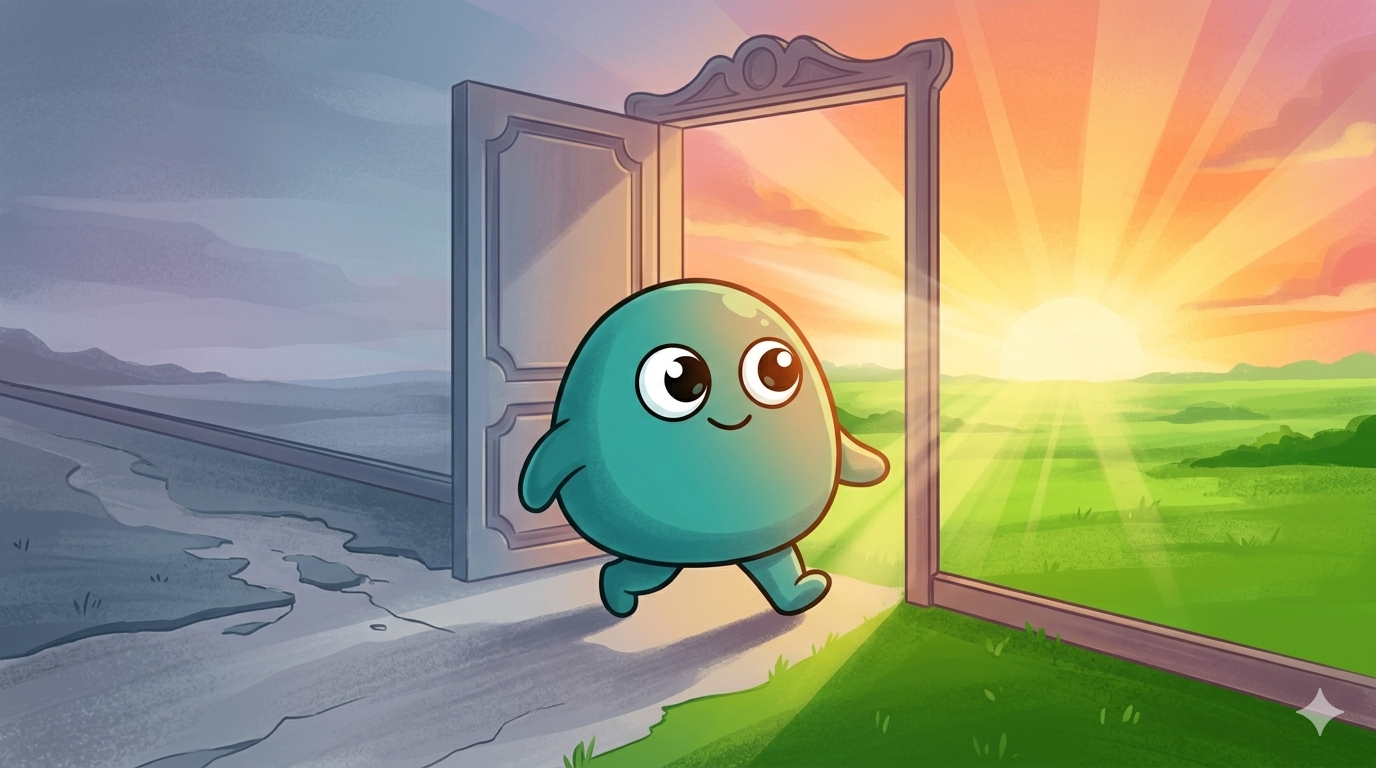
The Fresh Start Effect: Why Timing Your Habit Reset Actually Works
The Fresh Start Effect is real, peer-reviewed science — new beginnings like Mondays, birthdays, and the new year genuinely boost habit follow-through. Here's why, and how to engineer them.
January 1st gym memberships are a cliché. But the psychology behind why they happen — and why some of them actually stick — is genuinely interesting science that most people are unaware of.
In 2014, researchers Hengchen Dai, Katherine Milkman, and Jason Riis published a study in Management Science documenting what they called the Fresh Start Effect: a measurable increase in goal-directed behavior at temporal landmarks — the start of a new year, a new week, a birthday, the first of the month.
This wasn’t anecdote. It was data — and it has implications for how you design and restart habits.
What the Research Actually Found
Dai, Milkman, and Riis analyzed three separate datasets: gym visits across 12 months, daily step counts from a university fitness program, and commitment contract sign-ups on stickK.com. All three showed the same pattern — spikes in goal-directed behavior at temporal landmarks.
The landmarks that produced significant effects:
- Start of the week (Monday spikes vs. Tuesday–Friday)
- Start of the month (1st vs. subsequent days)
- Start of the year (January 1st and the days immediately following)
- Birthdays (day-of and the following week)
- Holidays (particularly the day after, when a “fresh chapter” framing activates)
The effect held even when controlling for motivation, prior behavior, and demographic variables. The temporal landmark itself was doing something psychologically distinct.
The proposed mechanism: temporal landmarks create a mental accounting boundary between a past self (who failed, or didn’t try) and a present self (who is now beginning again). Psychologically, the landmark allows people to archive past failure as belonging to a previous chapter of their story — a cognitive clean slate.
The Architecture of a Mental Accounting Boundary
Roy Baumeister’s research on the “narrative self” — the self as a story we tell — helps explain why temporal landmarks carry such power. Humans are meaning-making creatures. We don’t experience time as a continuous stream of equal moments; we carve it into chapters, arcs, and turning points.
Temporal landmarks function as natural chapter breaks. They allow you to say, with genuine psychological credibility: “That was then. This is now.”
This is also why the effect extends beyond culturally fixed dates. A 2021 follow-up study by Milkman’s team found that personally meaningful dates — the anniversary of a significant life event, the start of a new job, moving to a new city — produced Fresh Start Effect spikes comparable to calendar landmarks. It’s not the date that matters. It’s the sense of discontinuity.
Dan Ariely at Duke, whose research on mental accounting and behavioral economics informs much of this field, frames it simply: when we perceive a psychological boundary, we reset our running tally. The past goes in the “old ledger.” The future starts clean.
Why This Effect Fades — and How to Extend It
The Fresh Start Effect is real but temporary. The data in Milkman’s original study showed elevated goal behavior lasting roughly a week to ten days following the landmark. After that, the effect dissipates and behavior returns to baseline levels.
This is predictable — and it’s not a problem, if you understand how to use the effect strategically.
The landmark’s job is to initiate, not sustain. Getting started is genuinely hard; the fresh start removes the sunk-cost shame that prevents re-engagement. But sustaining a behavior requires different mechanisms: implementation intentions, environmental design, identity integration.
Practically, the Fresh Start Effect is most useful for:
Restarting after a break. If you’ve fallen off a habit, don’t wait for motivation to return. Find the nearest legitimate temporal landmark — the next Monday, the first of the month, a birthday, a return from travel — and use it as the declared restart point. The psychological discontinuity it creates is real, and you can leverage it without self-deception.
Launching a new habit. Rather than starting a habit mid-week on a random Wednesday, align the start date with a meaningful landmark. The “fresh chapter” framing engages identity-revision mechanisms that random start dates don’t.
Recovery, not perfection. Every time you miss a streak, the Fresh Start Effect is your tool for re-entering without accumulated shame. The research shows it works repeatedly — it doesn’t require that you’ve never used it before.
Designing Your Own Fresh Starts
Here’s the part most people miss: temporal landmarks don’t have to be socially designated. You can engineer them.
Milkman’s research explicitly showed that personally meaningful dates — dates with narrative significance to you — produced equivalent effects. This means:
- The week after you finish a demanding project
- The day you return from a trip
- The Monday after a family obligation resolves
- Any moment you can legitimately frame as “the chapter where I start X”
In Becoming, the identity statement you define creates its own landmark. When you write “I’m becoming someone who prioritizes movement every day,” you’re not just naming an aspiration — you’re declaring a narrative chapter. The moment you first log a habit under that identity is, functionally, a personal temporal landmark.
The effect is available to you at any time. You don’t have to wait for January.
The Pairing That Makes It Stick
The Fresh Start Effect gets you to day 1. Making it to day 30 requires pairing the fresh start with something more structurally durable.
Research by Phillippa Lally at University College London on habit formation timelines (published in the European Journal of Social Psychology, 2010) found that new behaviors reach automaticity anywhere from 18 to 254 days, with a median around 66 days. The Fresh Start Effect accelerates initiation — it doesn’t compress the time to automaticity.
The combination that works:
- Use the landmark to restart or launch without the weight of past failure
- Define an implementation intention for the first week (when and where exactly)
- Design the environment to reduce friction around the target behavior
- Attach the habit to an identity statement that makes each repetition a vote
The fresh start is the entry point. The structure is what you build once you’re inside.
Frequently Asked Questions
Is it self-deceptive to manufacture fresh starts on arbitrary dates?
Not at all — the psychological benefit doesn’t require that the landmark be externally designated. What matters is that you genuinely assign narrative significance to the date. Research on self-regulation consistently shows that the framing of a behavior has measurable effects on its execution. You’re not deceiving yourself; you’re using architecture.
Does the Fresh Start Effect work for breaking habits, not just building them?
Yes. The same mental accounting boundary that makes it easier to start a new behavior also makes it psychologically easier to leave a past behavior “in the old chapter.” Studies on quitting smoking and reducing alcohol consumption show elevated quit attempts clustering around personal temporal landmarks. The framing “I’m a non-smoker starting Monday” leverages the same discontinuity effect.
What if I’ve used the Fresh Start Effect many times and it no longer feels meaningful?
The effect can habituate if you use it as a substitute for genuine commitment rather than a launch mechanism. The fix is pairing it with real structural change — not just a new start date, but a new implementation intention, a new environmental design, or a new accountability structure. The landmark opens the door; the structure keeps you inside.
The Bottom Line
The Fresh Start Effect isn’t magical thinking. It’s a well-documented cognitive mechanism that creates a genuine psychological discontinuity between who you were and who you’re choosing to become. Used strategically — paired with solid implementation plans and identity-based framing — it’s one of the most practical tools in behavioral science.
You don’t have to wait for January. The fresh start is available at the next meaningful landmark you choose to declare.
Ready to declare your fresh start? Build identity-first habits in Becoming →
Related reading: Insights from Modern Behavioral Science · The Identity Habit Gap · The One-Percent Recovery Rule