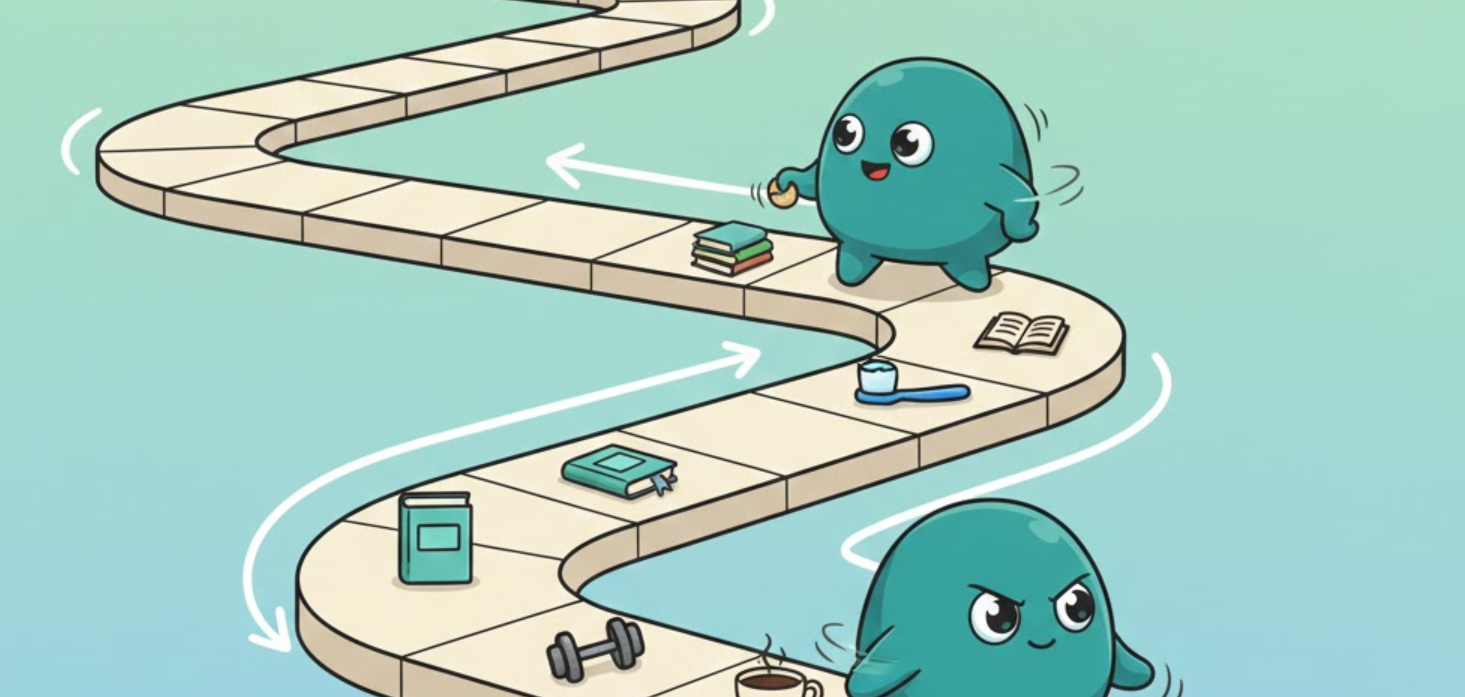
Habit Stacking: The Ultimate Guide to Building Behavior Chains
Master the art of habit stacking to create powerful behavior chains. Learn how to anchor new habits to existing routines for maximum success.
Habit stacking is one of the most powerful techniques in behavior design. By linking new behaviors to established routines, you leverage the brain’s natural tendency to form sequences. Let’s dive deep into how to master this technique.
What is Habit Stacking?
Habit stacking, popularized by James Clear in “Atomic Habits,” is the practice of linking a new habit to an existing one. The formula is simple:
After I [CURRENT HABIT], I will [NEW HABIT].
This works because your brain already has neural pathways for your existing habits. By attaching new behaviors to these pathways, you’re essentially hitchhiking on existing brain infrastructure.
Why Habit Stacking Works
1. Built-in Cues
Your existing habit becomes the trigger for your new habit. No need to remember or set reminders.
2. Contextual Consistency
You’re already in the right physical and mental space when your anchor habit occurs.
3. Momentum Transfer
The energy from completing one habit naturally flows into the next.
Building Your First Habit Stack
Step 1: Map Your Current Habits
Write down everything you do consistently each day:
- Wake up
- Check phone
- Use bathroom
- Brush teeth
- Make coffee
- Eat breakfast
- Commute to work
Step 2: Identify Anchor Points
Look for habits that:
- Happen at the same time daily
- Are already automatic
- Have a clear beginning and end
Step 3: Attach Your New Habit
Choose where in your routine the new habit fits naturally. Consider:
- Physical location
- Energy levels
- Time available
- Mental state
Advanced Stacking Strategies
The Morning Stack
Build a complete morning routine by chaining multiple habits:
- After I turn off my alarm, I will drink a glass of water
- After I drink water, I will do 5 minutes of stretching
- After I stretch, I will meditate for 2 minutes
- After I meditate, I will write one sentence in my journal
The Transition Stack
Use transitions between activities as anchor points:
- After I close my laptop for lunch, I will take a 10-minute walk
- After I park my car at home, I will do a 1-minute breathing exercise
- After I put my kids to bed, I will read for 15 minutes
The Environment Stack
Let physical spaces trigger behaviors:
- After I sit at my desk, I will review my top 3 priorities
- After I enter the gym, I will do 5 minutes of mobility work
- After I sit down for dinner, I will share one highlight of my day
Common Mistakes to Avoid
Starting Too Big
Don’t attach a 30-minute workout to your morning routine. Start with one push-up.
Weak Anchors
Don’t attach habits to behaviors that aren’t consistent. “After I feel motivated” is not a reliable anchor.
Overloading
Don’t try to build a 10-habit stack immediately. Start with one addition at a time.
Tracking Your Stacks in Becoming
The Becoming app is designed with habit stacking in mind. When you create a new habit, you can specify its position in your daily routine and link it to existing habits.
The Habit Design Studio helps you visualize your chains and identify the optimal placement for new behaviors.
Your Challenge
This week, identify one existing habit and attach one new micro-habit to it. Practice this stack for 7 days before adding anything else.
Remember: Chains are built one link at a time.