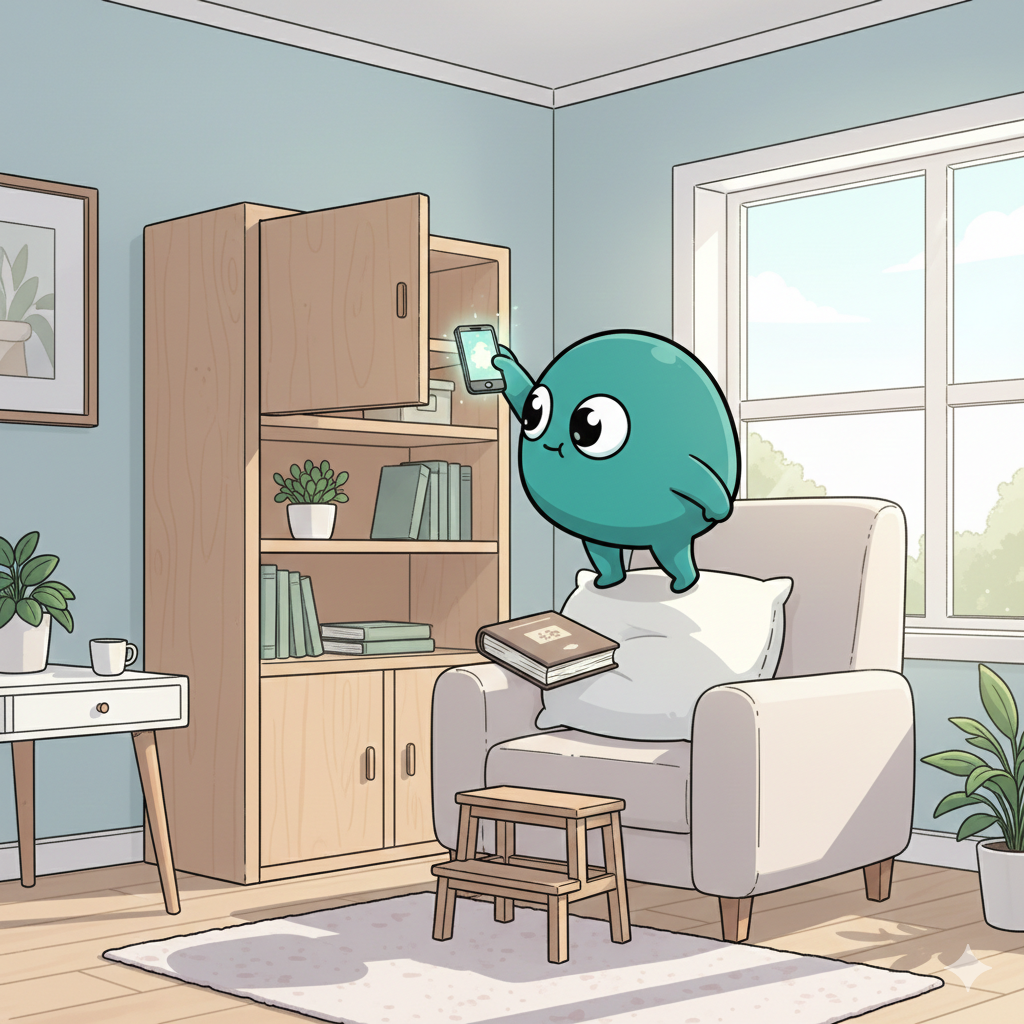
Identity-Based Environment Design: Architecting Your Self
Why willpower fails in a poorly designed room. Learn how to audit your surroundings to remove 'identity friction' and make your desired habits the path of least resistance.
Most of us treat our environment like a backdrop to our lives. But in reality, your environment is an active participant in your behavior.
If you want to be a “Healthy Individual” but your kitchen is filled with processed snacks, you aren’t just fighting a craving—you’re fighting your architecture. And architecture almost always wins.
The Mystery of “Choice Architecture”
Behavioral economists use the term Choice Architecture to describe how the way options are presented influences our decisions. If the fruit bowl is on the counter and the chips are in a high cabinet, you are significantly more likely to eat the fruit.
Identity-Based Environment Design takes this a step further. We aren’t just designing for better choices; we are designing to reduce identity friction.
What is Identity Friction?
Identity friction is the gap between who you want to be and the physical steps required to act like that person.
- Identity: “I am an artist.”
- Friction: Your brushes are in a box, your paints are dried up, and your easel is in the attic.
- Result: You don’t paint.
To become the artist, you must make the environment reflect that identity before you even start the work.
Three Steps to Architecting Your Self
1. Visual Cues (The Signal)
Your brain is incredibly responsive to visual prompts. If you want to be a reader, place a book on your pillow every morning. Your bed isn’t just for sleep anymore; it’s a signal for your reading identity.
2. Friction Audit (The Path)
Look at your desired habit. What are the 3-5 tiny physical steps required to start?
- Want to workout? (1) Find clothes, (2) Get shoes, (3) Find mat, (4) Find water. The Fix: Lay out your clothes and shoes night before. Put the mat in the middle of the floor. You’ve removed 3 steps of friction.
3. Identity Defaults (The Cage)
Design your environment so that failing requires more effort than succeeding. This is “inverse friction.”
- Want to stop scrolling? Leave your phone in a different room. Now, scrolling requires getting up—a physical friction that gives your prefrontal cortex time to wake up.
The Digital Architecture
In the age of Becoming, your digital environment is just as important as your physical one.
- Is your home screen a mess of distractions?
- Is your Becoming app icon easy to find?
- Do your notifications serve your identity or someone else’s agenda?
Audit your digital space. Move the “Identity Votes” (like Becoming or a reading app) to the dock. Move the “Distractions” to a hidden folder on the third page.
Your 5-Minute Audit
Go to the room where you spend the most time.
- Identify one identity you are working on in Becoming.
- Find one “Signal” you can add (e.g., a notepad and pen on the desk).
- Remove one “Friction” (e.g., clear the clutter off the chair where you meditate).
You don’t need more willpower. You need a better room.
IMPORTANT
Environment > Motivation If you have to choose between “feeling motivated” and “designing your desk,” choose the desk every time. Motivation is a guest; environment is the host.