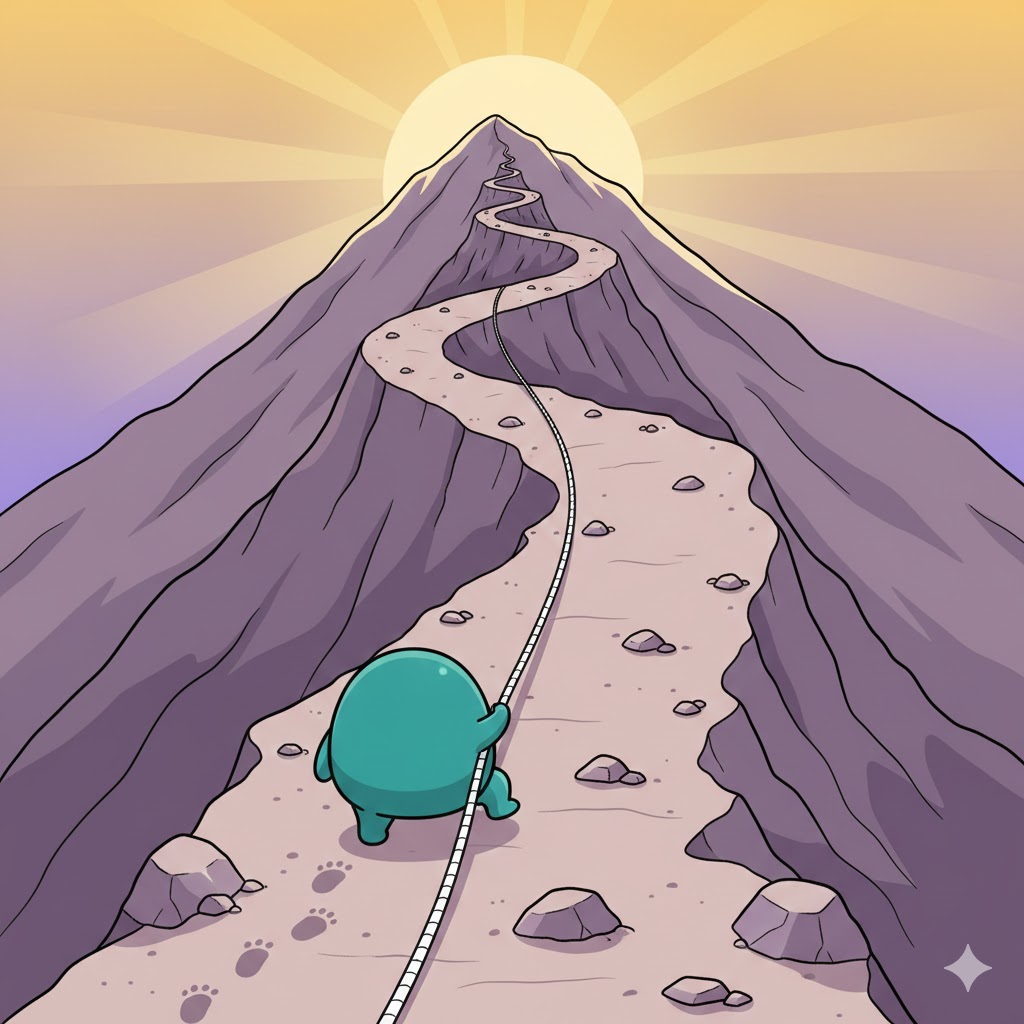
The Habit Recovery Protocol: What to Do After You've Completely Fallen Off
You broke your streak. You abandoned your habits. Now what? Learn the proven framework for getting back on track without shame or self-sabotage.
Two months ago, you were unstoppable. Meditating daily. Running 5 times a week. Reading before bed. Your Becoming calendar was filled with checkmarks.
Then life happened. You got sick. Work exploded. A relationship ended. And one miss became two, became a week, became “I guess I’m just not that person anymore.”
Here’s the truth: The skill of restarting after complete collapse is more valuable than never failing at all.
This is your roadmap back.
The Psychological Damage of Total Habit Collapse
When you go from “crushing it” to “doing nothing,” three destructive thought patterns emerge:
1. All-or-Nothing Catastrophizing
“I had a 90-day streak and I ruined it. What’s the point?”
The cognitive distortion: Believing that one break erases all progress.
The reality: Your brain still has the neural pathways. The habit isn’t gone—it’s dormant.
2. Identity Crisis
“I thought I was a runner/writer/healthy person. I guess I was lying to myself.”
The cognitive distortion: Defining your identity by current behavior instead of trajectory.
The reality: You ARE still that person. You’re just in a valley, not at the destination.
3. Shame Spiral
“I’m so disappointed in myself. I always do this. I’ll never change.”
The cognitive distortion: Self-criticism motivates change.
The reality: Shame paralyzes. Self-compassion enables recovery.
The Recovery Protocol: 7 Steps Back to Momentum
Step 1: Acknowledge Without Judgment (Day 1)
The practice: Open Becoming. Look at your calendar. See the gaps. Say out loud: “I stopped. That happened. It’s data, not identity.”
Why this matters: You can’t restart what you won’t acknowledge. But acknowledgment without self-flagellation is crucial.
Journal prompt (in Becoming notes):
- “I stopped because…”
- “What I learned about myself…”
- “What I’m ready to try differently…”
Step 2: Choose ONE Keystone Habit (Day 1)
The mistake: “I’m going to get back to ALL of it starting tomorrow!”
The strategy: Pick the ONE habit that, if restarted, would create momentum for others.
Examples:
- If exercise is your keystone → Start with 5-minute walks
- If journaling is your keystone → Start with one sentence daily -If meditation is your keystone → Start with one breath
In Becoming: Disable all other habits temporarily. Focus on ONE until it’s automatic again.
Step 3: Make It Absurdly Small (Days 1-7)
The principle: Your willpower is depleted from whatever caused the collapse. You need a win, not a workout.
The rule: Whatever you think is small enough, cut it in half.
- Wanted to run 30 minutes? Do 5.
- Wanted to meditate 20 minutes? Do 2.
- Wanted to write 500 words? Write 50.
Why: Your brain needs to relearn “I can do this.” That requires success, not ambition.
Track in Becoming: Every completion, no matter how small, is proof.
Step 4: The 7-Day Reboot (Days 1-7)
The commitment: Seven consecutive days of your ONE micro-habit.
Why 7 days:
- Long enough to create tiny momentum
- Short enough to feel achievable
- Creates a visible pattern in your calendar
The rule: You can always do MORE, but you must do AT LEAST the minimum.
In Becoming: Watch the calendar fill again. Notice the psychological shift around day 4-5.
Step 5: Analyze the Collapse (Day 8)
After 7 days of momentum, you’re ready to understand what went wrong.
The investigation questions:
- What was the trigger event? (Illness, stress, travel, relationship change)
- What environmental factor changed? (Moved, new job, schedule shift)
- Was the habit too big? (Unsustainable from the start)
- Did I lose sight of WHY? (Disconnected from identity)
- Did my social environment undermine me? (Peer pressure, isolation)
Document in Becoming notes. Future You will thank you.
Step 6: System Redesign (Days 8-14)
Based on your analysis, change the conditions, not just the behavior.
If the trigger was environmental:
- Habit: “When I wake up, I meditate”
- Redesign: Put meditation cushion by the bed (visual cue)
If the habit was too big:
- Habit: “Run 5 miles daily”
- Redesign: “Put on running shoes daily” (can run if feeling it, but the habit is just the shoes)
If you lost connection to identity:
- Review and rewrite your identity statement
- Make it more specific and emotionally resonant
Update in Becoming: Adjust habit parameters based on lessons learned.
Step 7: Gradual Re-expansion (Week 3+)
Only after 14 consecutive days of your micro-habit should you:
- Increase duration/intensity slightly
- Add a second habit (if desired)
- Expand based on natural momentum
The mistake: Rushing back to previous volume.
The strategy: Treat this like starting fresh. Build slowly.
The Compassionate Restart Mindset
Replace shame language with scientist language:
❌ “I failed again. I’m such a mess.” ✅ “Interesting. This approach didn’t work in this context. What can I adjust?”
❌ “I’ll never be consistent.” ✅ “I’ve been consistent before. I can be again. What was different then?”
❌ “I wasted all that progress.” ✅ “Every rep I did before still built neural pathways. Starting isn’t from zero.”
Research shows: Self-compassion increases the likelihood of getting back on track, while self-criticism increases the likelihood of giving up entirely.
Pattern Recognition: Are You Here Often?
If this is your third (or tenth) complete collapse-and-restart cycle, there’s a deeper pattern.
Possible root causes:
Cause 1: Habit Was Never Yours
You adopted it because “you should,” not because it aligned with your actual values.
The fix: Release the habit. Build only what serves YOUR life.
Cause 2: All-or-Nothing Thinking
You can only maintain habits when life is perfect. Any disruption = total abandonment.
The fix: Build “bad day” versions of habits. One push-up counts. One sentence counts. One breath counts.
Cause 3: Unsustainable Volume
You build elaborate morning routines with 12 habits. They work for 30 days, then life gets busy and everything collapses.
The fix: Build ONE rock-solid habit. Then maybe two. Never twelve.
Cause 4: No Recovery Plan
You never prepared for what happens when you miss a day.
The fix: Pre-decide your restart protocol. When you miss, you don’t wonder “what do I do now?”—you execute the plan.
The Streak Paradox
Streaks are motivating until they’re broken. Then they’re devastating.
The healthy approach to streaks:
Track two metrics in Becoming:
- Current streak (motivating when intact)
- Total completion percentage (resilient to breaks)
Example:
- Current streak: 0 days (just broke)
- Total percentage last 90 days: 78% (still impressive!)
One missed day doesn’t erase 70 successful days. The percentage reminds you of this.
Community Support During Recovery
When you’ve fallen off, isolation makes it worse.
Instead:
- Tell one trusted person: “I stopped. I’m restarting. Will you check in?”
- Join an online group for accountability (Reddit, Discord, etc.)
- Share your “Day 1” restart in a community
Why it works: Public commitment creates accountability. And knowing others have restarted (successfully) normalizes your experience.
Becoming’s Role in Recovery
The app is designed for exactly this situation:
1. Your History Isn’t Erased
- Past checkmarks remain visible
- Your longest streak is still recorded
- Evidence of capability persists
2. Starting Fresh Is One Tap
- No shame-inducing “reset” buttons
- Just log today, and today becomes Day 1
3. Insights Show Patterns
- “You’ve restarted successfully 3 times before”
- “Your success rate after restarts is 67%”
- Data reminds you: you’ve done this before
The Anti-Perfectionism Practice
New rule: Missing one day requires intentionally missing the second day too.
Wait, what?
The logic: If you miss Monday’s meditation accidentally, intentionally skip Tuesday’s BUT do a 30-second version.
Why: This breaks the “perfect streak or nothing” mentality. You learn that imperfect consistency beats perfect inconsistency.
The 30-Second Reset Ritual
When you realize you’ve stopped:
- Open Becoming (30 seconds)
- Read your identity statement (15 seconds)
- Ask: “What’s the smallest version of ONE habit I can do right now?” (15 seconds)
- Do that micro-habit (1-5 minutes)
- Log it (15 seconds)
Total time: Under 10 minutes.
Result: You’re back. Momentum restarted.
Real Recovery Stories: The Data
Research on habit recovery shows:
- 80% of people who restart within 48 hours maintain the habit long-term
- 45% of people who wait a week successfully restart
- 12% of people who wait a month ever restart
The lesson: The faster you restart (even micro-scale), the higher your success rate.
In Becoming: Set a “maximum gap” rule. “If I miss 2 days, I immediately do the 2-minute version, no exceptions.”
Your Recovery Action Plan
Right now (if you’ve fallen off):
- Open Becoming
- Choose ONE keystone habit
- Make it ridiculously small
- Do it RIGHT NOW (before you finish reading this)
- Log it
You just restarted. That’s the whole protocol.
Tomorrow, do it again. Then again. Seven days.
By next week, you’ll have proof you can come back. And that proof is more valuable than any streak.
The Ultimate Recovery Truth
You haven’t failed until you stop restarting.
Every restart is evidence of resilience. Every comeback builds meta-skill: the ability to recover.
This skill—coming back after total collapse—is what separates people who transform from people who just have good months.
Track your restart in Becoming. Build proof that you CAN come back. Because you always can.
You’re not just building habits. You’re building comebacks.
And comebacks built you.