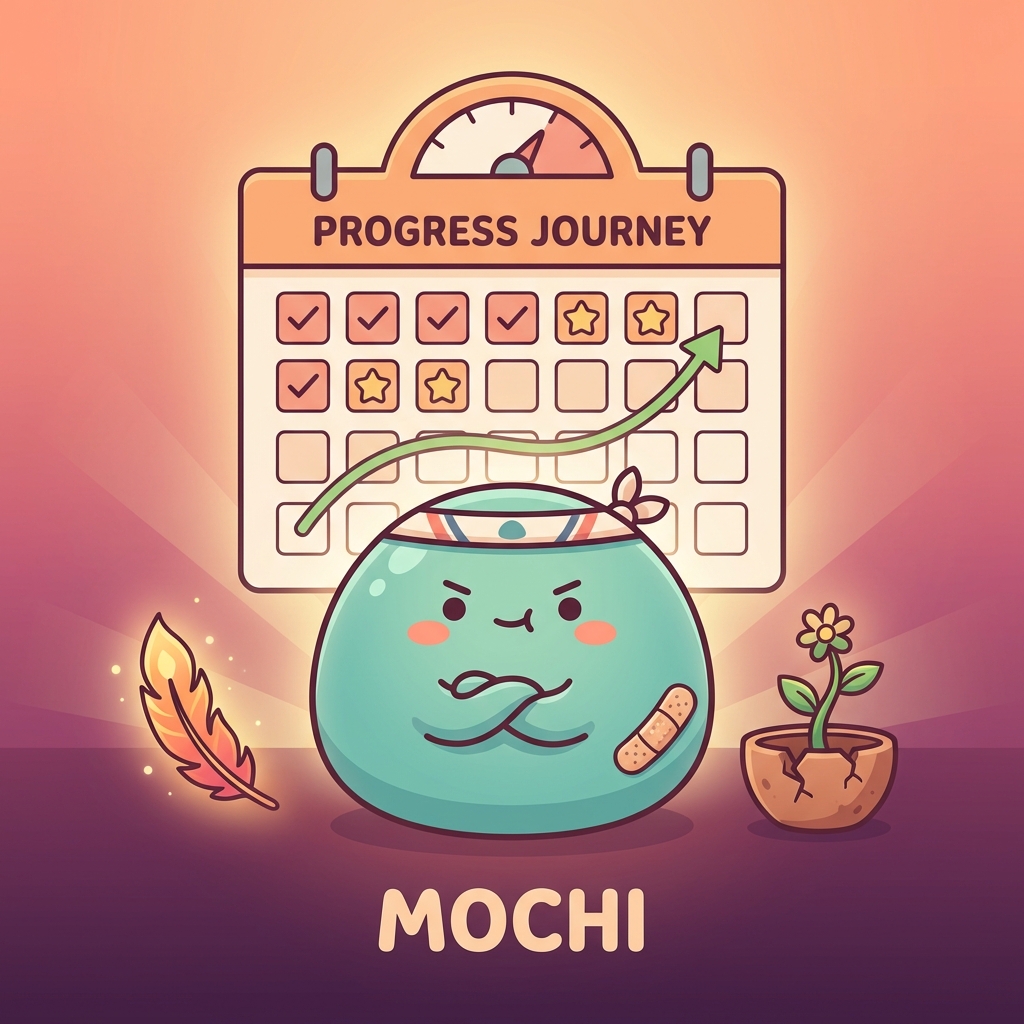
Why You Keep Breaking Habits (And How to Fix It)
Discover the real reasons your habits don't stick and learn proven strategies to build resilience into your daily practice.
It’s happened again. You had a perfect streak going—7, 14, maybe even 30 days—and then you missed one day. Then two. Then you stopped counting altogether.
Sound familiar? You’re experiencing what psychologists call the “what-the-hell effect,” and understanding it is the key to finally building habits that last.
The Myth of the Perfect Streak
Here’s what nobody tells you about habit formation: Breaking a streak is not the problem. It’s what happens next that determines success.
Research from the University College London shows that missing a single day has virtually no impact on long-term habit formation. The real damage comes from the story you tell yourself after you miss.
“I failed. I’m not cut out for this. Why bother starting again?”
This narrative—not the missed day itself—is what kills your habit.
The Real Reasons Habits Break
1. All-or-Nothing Thinking
You believe consistency means perfection. If you can’t do the full workout, you do nothing. If you can’t write 500 words, you write zero.
The fix: Adopt the “never miss twice” rule. Missing once is an event. Dissing twice is the start of a pattern. Your only goal after a miss? Show up tomorrow, even if it’s just for two minutes.
2. Identity Misalignment
Your habit feels like something you “should” do rather than something that reflects who you are.
The fix: Reconnect your habit to your identity. In Becoming, review your identity statement. Does this habit genuinely serve the person you want to become? If not, adjust either the habit or the identity.
3. Environmental Friction
Your environment isn’t designed for success. Your running shoes are in the closet. Your journal is buried under books. Your guitar is in its case.
The fix: Use the Two-Minute Rule and environment design. Make the first step of your habit so visible and easy that you can’t avoid it.
4. No Feedback Loop
You’re not tracking, so you can’t see patterns. You don’t know when or why you tend to miss.
The fix: This is where Becoming becomes invaluable. The Insights feature reveals:
- Which days you’re most likely to miss
- What emotional states correlate with breaks
- Environmental factors that influence your consistency
The Power of the Comeback
Here’s a radical idea: Your ability to restart after failure is more valuable than never failing at all.
Why? Because perfect streaks teach you nothing about resilience. But coming back after a miss? That’s where you build the mental strength that creates lasting change.
Think of habits like working out a muscle. You don’t build strength by lifting the same weight forever. You build it through stress, recovery, and comeback.
How to Build an Unbreakable Restart System
Strategy 1: Pre-commit to Your Comeback
Before you even start a habit, decide what you’ll do when (not if) you miss a day.
Write it down: “When I miss my morning pages, I will write one sentence as soon as I notice.”
This removes the need for willpower or decision-making when you’re already feeling defeated.
Strategy 2: Zoom Out
When you miss a day, open Becoming and look at your calendar view. See all those checkmarks? That’s evidence of who you are.
One miss doesn’t erase your identity. You’re still the person who shows up. This moment is just data about what didn’t work—and data is useful.
Strategy 3: Treat Breaks as Experiments
Instead of shame, get curious:
- What was different about that day?
- What can I learn?
- What would make tomorrow easier?
Log these insights in Becoming’s notes feature. Your failures become feedback.
Strategy 4: The 1% Recovery Rule
After a break, don’t try to “make up” for lost time. That leads to burnout and another break.
Instead, restart with the easiest possible version of your habit. Did you use to meditate for 10 minutes? Start with one. Build back slowly.
Becoming’s Role in Breaking the Cycle
The app is designed specifically to handle the psychology of breaks:
1. Visual Patterns: Your habit calendar shows the big picture, not just the last few days. This helps combat all-or-nothing thinking.
2. Streak vs. Frequency: Becoming tracks both your current streak AND your total completion percentage. Missing one day doesn’t erase your progress.
3. Insight Reports: Weekly reviews help you spot patterns before they become problems. You’ll see “I tend to miss on Thursdays” long before it derails you completely.
4. Identity Anchoring: Every time you log a habit, you see your identity statement. This constant reinforcement keeps you connected to why you’re doing this.
The Story You Tell Yourself Matters
Researcher Carol Dweck’s work on growth mindset shows that people who view failure as feedback (not identity) are exponentially more successful.
Two people miss a workout:
- Person A: “I’m lazy and undisciplined. I always quit.”
- Person B: “I missed today. That’s useful data. What can I learn?”
Person B doesn’t have more willpower. They have a better story.
Your Restart Plan (Right Now)
If you’ve been avoiding a habit you broke:
- Open Becoming
- Look at your past completions—you have shown up before
- Choose the smallest possible version of your habit
- Do it right now (literally, two minutes)
- Log it
That’s it. You just proved you can restart.
The best time to restart was yesterday. The second best time is now.
You’re not broken. Your habit isn’t broken. You just need a better system for coming back. And now you have one.