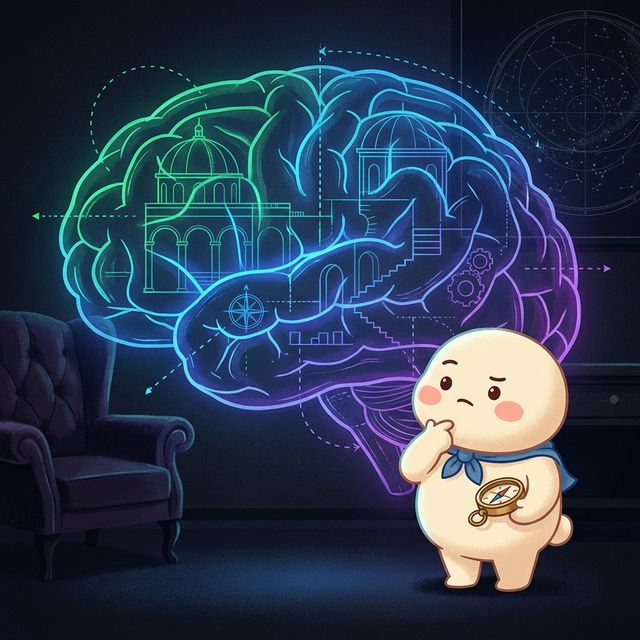
Willpower Architecture: Beyond the Battery Metaphor
Why thinking of willpower as a limited resource might be holding you back. Learn how to shift your mindset and design a system where 'will' is an expression of identity, not an endurance test.
For decades, we’ve been told that willpower is a battery. You start the day with a full charge, and every decision—from choosing a salad to resisting an aggressive email—drains it. By 7 PM, the battery is dead, and you find yourself face-first in a bag of chips.
This is the “Ego Depletion” model. And while it’s a useful metaphor, new research suggests it might be incomplete—and even counterproductive.
The Problem with the Battery Metaphor
When you believe your willpower is a limited resource, it becomes a self-fulfilling prophecy. Studies have shown that people who believe willpower is finite are the ones who experience the most depletion. Those who view willpower as an abundant or self-renewing resource show significantly more endurance.
In other words: Your beliefs about willpower are part of your willpower architecture.
From Endurance to Alignment
If you treat willpower as an endurance test, you are constantly fighting yourself. It’s a civil war between your “Aspirational Identity” (who you want to be) and your “Operational Identity” (who you are acting as right now).
Identity-Based Willpower isn’t about “trying harder.” It’s about alignment.
When an action is aligned with your identity, it requires significantly less cognitive effort. A vegetarian doesn’t use “willpower” to stay away from the steakhouse; they simply don’t eat meat. It’s not a struggle; it’s a definition.
Building Your Willpower Architecture
To move beyond the battery metaphor, you need to shift from resisting to designing.
1. The Meaning Multiplier
Research by Carol Dweck and others suggests that when we find a task meaningful or enjoyable, the “depletion” effect vanishes. If you’re doing a habit because you “should,” it drains clearly. If you’re doing it because it’s a vote for the person you love becoming, it can actually be energizing.
2. Decision Minimums
The “battery” drains fastest when we have to make choices. Your architecture should eliminate the choice.
- Don’t decide to work out; follow the ritual.
- Don’t decide what to eat; follow the plan. The less you choose, the more “will” you have for the things that matter.
3. Identity Anchoring
When you feel your resolve wavering, don’t ask “Can I resist this?” Ask “What would [Identity] do right now?”
In Becoming, every time you log a habit, you are reinforcing the floor of your architecture. You aren’t just checking a box; you are strengthening the structural integrity of your self-concept.
The Abundance Mindset
What if willpower isn’t a battery, but a muscle? Or better yet, a conversation?
Sometimes, what we call “low willpower” is actually our body signaling a need—rest, connection, or a change of pace. By listening to those signals instead of trying to “power through,” we build a more resilient system.
Your Experiment for Today
Next time you feel “drained,” try this:
- Pause. Acknowledge the feeling without judgment.
- Re-anchor. Briefly review your identity statement in Becoming.
- The 1-Minute Shift. Instead of quitting, do the absolute smallest version of your habit (The Two-Minute Rule).
You might find that your battery isn’t dead—it just needed a different connection.
Your will is not a limited resource. It is a designed outcome.
TIP
The Power of Labeling Instead of saying “I don’t have the willpower to do this,” try saying “I am currently experiencing a misalignment between my environment and my identity.” The first is a character flaw; the second is a design problem you can fix.